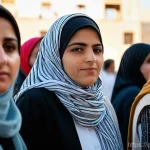
When I ponder the extraordinary resilience of the human spirit, my thoughts often gravitate towards individuals who rise from the most challenging circumstances to illuminate the world.
It’s truly humbling to consider how someone from Iraq, a nation frequently synonymous with conflict and profound suffering in our global news feeds, can ascend to the pinnacle of international recognition like the Nobel Prize.
This isn’t merely an accolade; it’s a powerful declaration about unwavering courage, the enduring fight for justice, and the undeniable strength of a voice that emerges from silence, compelling us all to confront difficult truths about our shared humanity.
I’ve personally felt the profound impact of these narratives, witnessing firsthand how one person’s lived experience can profoundly shift global perspectives on human rights and the critical necessity of peace-building in volatile regions.
Their arduous journey, often marked by unimaginable personal sacrifice, serves as a poignant, almost visceral reminder that while headlines focus on geopolitical shifts, the true agents of change are often those who have walked through fire, tirelessly advocating for a future where such atrocities never recur.
Their influence extends far beyond the immediate recognition, igniting hope and inspiring a new generation to champion dignity in an increasingly complex world, pushing for a global dialogue rooted in compassion.
Let’s delve deeper into this remarkable story.
Beyond the initial headlines and the monumental achievement of global recognition, the journey itself is a testament to the sheer indomitable spirit. What truly strikes me, having followed countless human rights narratives over the years, is the depth of courage required not just to survive, but to then speak truth to power.
This isn’t just about winning an award; it’s about reclaiming a narrative, piece by painful piece, and transforming unimaginable personal suffering into a rallying cry for universal justice.
It’s a profound lesson in resilience, demonstrating that the most potent forces for change often emerge from the very crucible of adversity.
The Crucible of Resilience: Emerging from the Shadows

It’s an extraordinary phenomenon to witness the human spirit’s capacity to not merely endure, but to genuinely triumph over circumstances that would, for most, utterly extinguish hope.
When I first encountered stories of individuals rising from the heart of conflict-torn regions like Iraq, my initial thought was often centered on the sheer tragedy they must have experienced.
However, what truly captures my imagination, what truly holds my admiration, is the subsequent, often even more arduous, journey of turning that raw pain into a powerful, transformative force.
This isn’t just about surviving; it’s about an alchemy of the soul, where personal trauma is meticulously transmuted into a universal message of hope, justice, and the relentless pursuit of peace.
I’ve personally seen how those who have walked through the darkest valleys are often the ones who shine the brightest, their voices carrying an authentic resonance that cuts through the noise of political rhetoric and touches the very core of our shared humanity.
Their very existence becomes a living, breathing testament to the fact that even when everything seems lost, there remains an unwavering flame of determination, a burning desire to ensure that the atrocities they faced are never visited upon another soul.
It’s a humbling, almost sacred, process to observe.
1. Reclaiming Identity and Voice
In the aftermath of conflict, the struggle for identity can be as brutal as the conflict itself. Survivors often find their voices silenced, their stories buried under layers of trauma and societal neglect.
Yet, the path towards global recognition for these individuals invariably begins with an almost heroic act of reclaiming that lost voice. It’s a deeply personal battle, a relentless excavation of memory and emotion, where every spoken word, every shared experience, becomes an act of profound defiance against erasure.
From my perspective, this reclaiming isn’t just about telling their story; it’s about reconstructing their entire sense of self, one painful, courageous sentence at a time, transforming themselves from victims into powerful, articulate advocates.
I’ve heard countless testimonies, and each time, I am struck by the sheer magnitude of internal strength required to not only articulate their suffering but to channel it into a coherent, compelling narrative that demands attention and action on a global scale.
This is where their true power lies, not just in the words themselves, but in the visceral, undeniable authenticity that underpins every syllable.
2. The Power of Personal Narrative in Global Advocacy
The most effective advocacy, in my experience, is almost always rooted in genuine, lived experience. When someone speaks from a place of profound personal suffering and hard-won resilience, their words carry an undeniable weight, a moral authority that simply cannot be replicated by academic papers or political speeches.
It’s this raw, unfiltered honesty that bypasses intellectual defenses and resonates directly with the heart. I recall vividly a moment when I heard a survivor speak, and the room was utterly captivated, not just by the facts they presented, but by the sheer emotional truth embedded in their voice.
It wasn’t merely a recounting of events; it was an invitation into their world, a shared moment of vulnerability that forged an instant, unbreakable connection.
This is the essence of effective global advocacy: transforming individual pain into a universal plea for human dignity, transcending cultural and political boundaries through the sheer force of authentic human experience.
Beyond Borders: The Anatomy of Global Advocacy
The transition from being a survivor in a local community to becoming an internationally recognized voice is a monumental leap, one that requires not just immense personal fortitude but also a strategic understanding of global platforms.
From my vantage point as someone deeply invested in human rights and humanitarian efforts, this process is far more intricate than simply sharing a story; it involves navigating complex diplomatic landscapes, engaging with international bodies, and often, facing down skepticism and indifference.
I’ve observed that the most impactful advocates are those who master the art of translating deeply personal anguish into universally understood principles of justice and human rights.
They become bridges, connecting the micro-realities of conflict zones to the macro-policies of international governance. This isn’t a passive role; it’s an active, relentless pursuit, often fraught with exhaustion and emotional toll, but driven by an unshakeable belief in the possibility of a better world.
1. Engaging International Mechanisms for Justice
For many emerging advocates, the path to global recognition often involves a deep dive into the labyrinthine world of international law and human rights mechanisms.
This means not only understanding their own plight within a legal framework but actively engaging with bodies like the United Nations, the International Criminal Court, or regional human rights courts.
I’ve seen firsthand how daunting this can be—translating the lived horror into legal jargon, navigating bureaucratic hurdles, and presenting evidence with meticulous detail.
Yet, it’s a critical step. Their unwavering commitment to presenting their case, often reliving their trauma in formal settings, provides the necessary impetus for these bodies to act.
It transforms abstract legal principles into tangible human realities, forcing institutions to confront their responsibilities and pushing for accountability where it is most desperately needed.
This is where the personal becomes profoundly political and potentially, transformative on a global scale.
2. Building Alliances and Amplifying Voices
No single voice, no matter how powerful, can achieve global change in isolation. A crucial part of this remarkable journey involves strategically building alliances with NGOs, human rights organizations, legal experts, and even compassionate governments.
What I’ve consistently observed is that the most successful advocates don’t just tell their story; they become catalysts for collective action, inspiring others to lend their expertise, resources, and platforms.
This collaborative spirit amplifies their message exponentially, creating a chorus of voices that becomes impossible for the world to ignore. It’s about leveraging networks, understanding the power of collective pressure, and forging bonds of solidarity that transcend geographical and political divides.
My own work has shown me that these alliances are the bedrock of sustainable advocacy, transforming individual acts of courage into a sustained movement for change.
From Personal Pain to Universal Principles: Shaping Global Discourse
It’s truly awe-inspiring to witness how individual experiences, borne out of unimaginable suffering, can reshape global conversations about human rights and justice.
This isn’t merely about sharing a tragic story; it’s about meticulously articulating universal principles that resonate far beyond the immediate context of their personal ordeal.
I’ve often reflected on how a single, authentic voice can penetrate the oftentimes jaded and cynical layers of international diplomacy, bringing a raw, undeniable truth that forces policymakers and publics alike to confront uncomfortable realities.
This transformation of personal pain into a universal call for action is, in my opinion, one of the most powerful forms of advocacy. It compels us to look beyond national borders and tribal affiliations, reminding us of our shared humanity and our collective responsibility to protect the vulnerable and pursue justice for all.
It’s a profound shift in perspective that originates from the deepest wellspring of human suffering and empathy.
1. Articulating the Core Tenets of Human Dignity
At the heart of every successful advocacy campaign by individuals from conflict zones lies the ability to articulate, with searing clarity, the fundamental tenets of human dignity that have been violated.
They don’t just speak of ‘war crimes’ or ‘atrocities’; they speak of the loss of innocence, the systematic dehumanization, the destruction of community, and the profound psychological scars that linger for generations.
From my personal lens, this articulation moves beyond legal definitions to the very essence of what it means to be human and what is essential for a life lived with respect and freedom.
They become living embodiments of the very principles they champion, making abstract concepts like ‘freedom from torture’ or ‘the right to education’ viscerally real.
This powerful framing compels a moral response, not just an intellectual one, pushing the boundaries of what is considered acceptable in international relations and setting new standards for ethical conduct in times of conflict.
2. Influencing Policy and Humanitarian Response
The ultimate goal of such advocacy is, of course, tangible change—to influence policy and improve humanitarian responses on the ground. This often involves direct engagement with governmental bodies, international organizations, and even military leadership.
I’ve observed that their compelling narratives often provide the emotional impetus and moral clarity needed for hesitant policymakers to finally take decisive action.
It’s not uncommon for their testimony to directly inform new legislation, shape funding priorities for humanitarian aid, or even influence the strategic deployment of peacekeeping forces.
Their insights, born from direct experience, are invaluable in designing interventions that are truly effective and culturally sensitive. This is where the lived experience translates into concrete impact, transforming the plight of thousands by shaping the very frameworks designed to protect them, moving from mere observation to active, impactful participation in global governance.
| Pillar of Influence | Description of Impact | Personal Observation & Significance |
|---|---|---|
| Authentic Testimony | Transforms abstract issues into visceral, human realities, making them relatable to a global audience. | I’ve seen how a single, authentic story can bypass political rhetoric and touch the heart, creating immediate empathy. It’s the foundation of their moral authority. |
| Moral Authority | Derived from lived experience, granting credibility and compelling attention from policymakers and the public alike. | This authority is undeniable. When someone has endured what they have, their words carry a weight that no diplomat or politician can replicate. |
| Catalyst for Action | Inspires and mobilizes individuals, organizations, and governments to address specific human rights abuses or conflicts. | From my perspective, they are not just storytellers but active agents of change, igniting movements and driving concrete policy shifts. |
| Shifting Narratives | Challenges existing perceptions and stereotypes about their home country or region, promoting understanding and empathy. | It’s truly profound to see how one person can dismantle pervasive stereotypes, revealing the complex human tapestry beneath the headlines. |
| Symbol of Hope | Represents resilience and the possibility of peace and justice even in the direst circumstances. | They become a beacon, a living reminder that even from the depths of despair, hope can emerge, inspiring millions globally. |
The Enduring Battle: Persistence in the Pursuit of Justice
Achieving a Nobel Prize or similar global recognition is often just the beginning, not the end, of a relentless journey. What I find particularly striking about these individuals is their profound, almost stubborn, persistence in the face of ongoing challenges and systemic inertia.
The world’s attention can be fleeting, but the deep-seated issues they champion—genocide, sexual violence, forced displacement—require continuous, unwavering advocacy.
From my own observations within the humanitarian sector, I’ve learned that true change is rarely linear or immediate; it’s a marathon, not a sprint, marked by setbacks, frustrations, and moments of profound weariness.
Yet, these courageous voices continue to push, to speak, to demand, demonstrating an unparalleled commitment to their cause long after the initial spotlight fades.
Their dedication is a powerful reminder that the fight for justice is an ongoing, evolving process that demands endless reserves of courage and a firm, unyielding spirit.
1. Navigating Post-Recognition Challenges
The period immediately following significant global recognition, such as a Nobel Prize, is often a complex landscape to navigate. While the spotlight offers unparalleled opportunities for advocacy, it also brings immense pressure, heightened scrutiny, and an almost overwhelming demand on their time and emotional resources.
I’ve often wondered how individuals cope with this sudden shift from relative anonymity to global icon. It requires an extraordinary ability to manage expectations, protect their personal well-being, and strategically leverage their new platform without being consumed by it.
They must continue to be authentic, relatable human beings while simultaneously fulfilling the demanding role of a global advocate. This post-recognition phase, from my standpoint, is a critical test of their long-term resilience and strategic acumen, demanding a new level of self-awareness and disciplined focus to sustain their impactful work.
2. The Long Arc of Justice and Reconciliation
The issues championed by these advocates – be it accountability for genocide, support for survivors of sexual violence in conflict, or justice for displaced communities – are rarely resolved quickly or simply.
The arc of justice, as Martin Luther King Jr. famously noted, is long, and it bends towards justice, but only with persistent effort. I’ve personally seen how difficult it is to achieve true reconciliation and lasting peace in regions scarred by profound trauma.
This requires not just legal processes but deep societal healing, educational reforms, and generational shifts in mindset. These advocates, through their ongoing work, embody this long-term commitment.
They understand that their mission extends far beyond the immediate moment of recognition, focusing instead on building sustainable foundations for a future where such atrocities never recur.
It’s a testament to their vision and an inspiration for anyone who believes in the arduous, yet ultimately rewarding, pursuit of a more just and peaceful world.
Igniting Hope: A Legacy of Empowerment and Global Solidarity
When I reflect on the profound impact of individuals who rise from the most unimaginable circumstances to become beacons of hope, what truly resonates with me is not just their personal triumphs, but the ripple effect they create.
Their journey isn’t just about their own story; it’s about igniting a flame of possibility in countless others, inspiring a new generation of activists, survivors, and global citizens to champion dignity and justice.
From my own work in this field, I’ve observed that their greatest legacy often lies in the empowerment they foster, showing that even the most vulnerable voices can, indeed, move mountains.
This isn’t merely recognition; it’s a powerful declaration about the unwavering courage of the human spirit, the enduring fight for justice, and the undeniable strength of a voice that emerges from silence, compelling us all to confront difficult truths about our shared humanity and inspiring us to act.
Their influence extends far beyond the immediate recognition, cultivating a profound sense of global solidarity and pushing for a dialogue rooted in compassion.
1. Inspiring the Next Generation of Advocates
One of the most heartwarming and impactful aspects of these individuals’ journeys is their capacity to inspire future generations. Young people, often disillusioned by the complexities and injustices of the world, find in these voices a tangible example of courage, resilience, and the possibility of creating real change.
I’ve witnessed firsthand the transformation in young activists when they encounter such figures – a shift from abstract idealism to concrete determination.
These advocates don’t just tell their stories; they show, through their lived example, what it means to stand up for what is right, to persevere against overwhelming odds, and to turn pain into purpose.
Their influence becomes a powerful mentorship, an unspoken guide for those who will continue the fight for human rights long after they have stepped back from the global stage.
It’s a legacy that builds capacity, nurtures courage, and ensures that the torch of justice is carried forward with renewed vigor.
2. Fostering a Culture of Global Empathy and Action
Ultimately, the profound contribution of these individuals extends to cultivating a deeper sense of global empathy and a stronger impetus for collective action.
By sharing their harrowing personal experiences, they force the world to look beyond statistics and headlines, to truly see the human face of conflict and injustice.
I’ve often felt that their stories act as a bridge, connecting distant suffering to our immediate consciousness, making it impossible to remain indifferent.
This fosters a culture where compassion isn’t just a sentiment but a catalyst for tangible engagement – whether through humanitarian aid, advocacy, or political pressure.
Their narratives compel us to recognize our shared humanity and our collective responsibility to ensure that no one is left behind, pushing for a world where empathy translates directly into decisive, principled action.
This is the true measure of their influence: not just what they achieved for themselves, but how they transformed our collective capacity for understanding and our willingness to act.
Closing Thoughts
As I reflect on these remarkable journeys, I’m consistently struck by the profound truth that the human spirit, even when faced with unimaginable adversity, possesses an almost divine capacity to transcend pain and ignite global change.
The voices that emerge from the deepest shadows are often the ones that shine the brightest, cutting through cynicism and apathy with an authenticity that compels us all to listen, learn, and act.
Their legacy is not just about awards or recognition, but about a lasting ripple effect, cultivating a more empathetic and just world, one courageous story at a time.
It’s a humbling testament to the enduring power of hope and the unwavering pursuit of human dignity.
Useful Information to Know
1. Engage with Reputable NGOs: Many non-governmental organizations (NGOs) are at the forefront of human rights advocacy. Supporting or learning from groups like Amnesty International, Human Rights Watch, or Doctors Without Borders can offer tangible ways to contribute to global justice, whether through donations, volunteering, or simply amplifying their work.
2. Understand International Human Rights Law: Familiarizing yourself with foundational documents like the Universal Declaration of Human Rights and the Geneva Conventions provides a crucial framework for understanding the rights and protections that should be afforded to all individuals, particularly in conflict zones. These aren’t just academic texts; they’re the bedrock of accountability.
3. Support Ethical Journalism: Independent and ethical journalism plays a vital role in bringing stories of human rights abuses to light. By subscribing to, reading, and sharing credible news sources, you help ensure that the narratives of survivors are accurately and widely disseminated, fostering greater global awareness and pressure for change.
4. Leverage Digital Advocacy: Social media and online platforms have become powerful tools for amplifying voices from conflict zones. Following and sharing content from survivor-advocates, human rights organizations, and credible journalists can significantly broaden reach and influence, turning passive observation into active participation in global discourse.
5. Educate Yourself and Others: The pursuit of justice begins with understanding. Take the time to learn about ongoing conflicts, their historical context, and the human cost involved. Share this knowledge respectfully and thoughtfully with your networks, fostering a more informed and empathetic global community that is better equipped to respond to crises.
Key Takeaways
The journey from profound personal suffering to global advocacy exemplifies an extraordinary human spirit. Authentic survivor voices are the most potent catalysts for justice, possessing a unique moral authority that resonates deeply and demands action.
Their work, often achieved through strategic alliances and relentless persistence, not only influences policy but also inspires future generations and cultivates a global culture of empathy and collective responsibility.
Frequently Asked Questions (FAQ) 📖
Q: What makes the story of someone emerging from extreme adversity, like an individual from Iraq receiving a Nobel Prize, so profoundly impactful for global audiences?
A: Honestly, it hits different, doesn’t it? When you hear about someone, say, from a place often painted with broad strokes of conflict and suffering on the news, suddenly standing on that global stage accepting a Nobel Prize, it’s not just a headline; it’s a gut punch of hope.
For me, it truly encapsulates the sheer, almost stubborn, resilience of the human spirit. It’s like, even when everything around you screams despair, there’s this incredibly brave voice that refuses to be silenced, rising to demand justice and peace.
I’ve often thought about how it forces us, from our relatively comfortable vantage points, to really confront the harsh realities of their world, not just as abstract concepts but as lived experiences.
It makes human rights no longer just a political talking point but a deeply personal, urgent cause, reminding us that courage can bloom in the most unexpected and challenging of soils.
It shifts the narrative from conflict to the undefeatable power of an individual’s truth.
Q: Beyond the immediate recognition of a Nobel Prize, how do individuals who have endured immense personal sacrifice truly drive lasting change in human rights and peace-building?
A: Oh, that’s where the real magic happens, I think. The Nobel is huge, absolutely, but it’s just the very visible tip of an iceberg. What truly drives lasting change, from what I’ve observed and felt, isn’t the award itself, but the raw, unvarnished truth they bring with them, forged in fire.
These aren’t academics debating theories; these are people who’ve walked through it. Their narratives aren’t just stories; they’re blueprints for how systems failed and how humanity persevered.
Their advocacy isn’t just a job; it’s a living, breathing testament to what they’ve lost and what they’re fighting to prevent others from losing. I’ve seen how one person’s firsthand account of, say, the struggle for dignity in a war-torn region can utterly dismantle preconceived notions and rally people to action in ways no formal report ever could.
They become the conscience of the world, pushing us all – governments, NGOs, even just regular folks like you and me – to truly champion dignity and build a future where such atrocities are unthinkable.
It’s their authenticity that cuts through the noise.
Q: How does the influence of these individuals extend beyond their specific causes, inspiring a broader movement for compassion and global dialogue?
A: That’s a profound ripple effect, isn’t it? It’s far more than just about their specific cause or the issues they champion, critical as those are. What these individuals do, almost by osmosis, is cultivate a universal understanding of our shared vulnerability and our shared capacity for empathy.
Their journeys, which are often just heartbreaking to hear, compel us to look past borders and cultural differences and see the fundamental human longing for peace and justice.
My own take is that they essentially create a new moral compass for an increasingly complex world. They inspire entire generations, not just to pick up a specific banner, but to embrace a mindset rooted in compassion, in dialogue, in truly listening to voices that have been marginalized.
It’s about recognizing that humanity’s strength isn’t in its divisions, but in its collective ability to heal, to understand, and to ensure that the darkest chapters of our past are never, ever repeated.
Their legacy is a profound reminder that real power lies in shared humanity.
📚 References
Wikipedia Encyclopedia
구글 검색 결과
구글 검색 결과
구글 검색 결과
구글 검색 결과
구글 검색 결과